
Radio is still one of the strongest ways for new music to reach listeners who aren’t already looking for it.
Getting your song on the radio isn’t luck: it comes down to a broadcast-ready track, the right stations and a pitch that makes a programmer’s decision easy.
This guide breaks the process into five practical steps, from preparing your track and choosing suitable stations to pitching your music and measuring the response – with a focus on dance, pop, electronic, rock and urban releases, the genres Syndicast works with every day.
In This Article…
- How to boost your music career with airplay on commercial radio
- 5-step guide to getting your music played on commercial radio stations
- How to pick and pitch the right radio stations
- Measuring success after you get your music played
Landing That First Spin
Securing that coveted first radio play is the culmination of a well-executed strategy. It’s about more than just having a great song; it’s about presenting that song professionally to the right people at the right time.
The journey begins with polishing your track to meet broadcast standards, ensuring it sounds flawless and fits seamlessly alongside major record label releases.
The next crucial phase is meticulous research – identifying the specific stations and even individual DJ shows that align with your unique sound and audience. You can’t just get your song on radio by sending it out to radio programmers blindly; precision targeting is everything.
Once your track is ready and your targets are identified, the focus shifts to crafting a compelling pitch. This involves creating a comprehensive “pitch pack” with an Electronic Press Kit (EPK), a compelling story, and social proof that demonstrates your existing momentum.
Outreach needs a planned email schedule and polite, persistent follow-up. Using a radio plugging service is often more effective than contacting stations individually.
Finally, once your song is on the radio, the work doesn’t stop. You must monitor its performance, amplify every spin on social media, and use the data to build momentum for your next move. Sharing that support can help you catch the attention of music bloggers, Spotify playlist curators and radio DJs.
This five-step process – polish, target, pitch, persist, and amplify – is your blueprint for turning radio silence into career-defining airplay.
How to Get Your Music on the Radio
Here is a roadmap to getting radio airplay!

Step 1: Polish the Track – Mastering, Loudness & The Clean Edit
Before a music director or DJ will even consider your track, it needs to meet professional broadcast standards. Send a mastered version that is ready for broadcast.
- Professional Mastering: This is non-negotiable. Mastering is the final stage of audio post-production where a track is polished to ensure it sounds its best across all playback systems, from high-end studio monitors to a car radio or earbuds. A professional mastering engineer will balance the sonic elements, optimise the loudness, and ensure your track has the clarity, punch, and dynamic range to compete with other great music on the playlist. There are also online platforms to help with this.
- Loudness and Delivery Requirements: Supply a professionally mastered track without clipping or excessive limiting, and provide an alternative version if the station requests one.
- The Clean Radio Edit Version: Many stations won’t play explicit lyrics, so if your lyrics are explicit, prepare a clean version as well. For dance and electronic tracks, consider a shorter edit without the long DJ intro and outro, and keep the extended mix for DJs and specialist shows. While it may be a pain for independent artists to create these, they are a music industry standard and can be reused on streaming platforms like Apple Music.
Step 2: Target the Right Outlets – Genre Mapping & Audience Data
Sending your music to the wrong station, especially smaller stations, is a waste of time and resources. Meticulous research is the key to an effective radio promotion campaign.
- Genre and Format Mapping: Start by identifying the radio formats that align with your genre. A dance-pop single fits hit-music (CHR) stations, a club track fits dance radio and specialist mix shows, a rock single needs rock or alternative formats, and urban releases fit hip-hop, R&B and urban-contemporary stations. Use online radio directories and databases to find stations that specialise in your sound. Listen to these stations to get a feel for their programming and playlists.
- Audience Data: Dig deeper to understand the demographics of each target station. Does their typical listener match your target audience? Do they play music similar to yours? Many larger stations provide media kits on their radio station websites that contain this valuable information. Look beyond your own country too: many stations in Europe, Latin America and Asia actively look for international releases, and smaller and mid-sized FM, DAB and online stations are often the most open to new artists.
- Specialist Shows and DJs: Don’t just focus on the main station playlist. Many stations have specialist shows, often in the evenings or on weekends, that are dedicated to new music discovery. Research the DJs who host these shows, listen to their past playlists, and follow them on social media to understand their specific tastes. A personal connection with an influential DJ can be your most powerful asset.

Step 3: Build the Pitch Pack – EPK, Storyline & Social Proof – Music Industry Essentials
Your pitch is your professional introduction to programme directors – for both internet radio and commercial stations. Keep your pitch concise and compelling. Include everything the music director needs to assess your track. This is typically delivered as an Electronic Press Kit.
Your Pitch Pack must include:
- High-Quality Audio: A link to a high-resolution (320 kbps MP3 or WAV digital format) download of your mastered, clean radio edit. Include the artist name, track title and ISRC with your submission.
- A Compelling Bio: A short, engaging artist biography that tells your story and highlights what makes you unique – whether you’re an indie artist or a veteran, this is an essential part of music promotion strategy.
- Professional Press Photos: A selection of high-resolution images that reflect your brand and artist identity.
- Key Track Information: Include the song title, music genre, tempo (BPM), and a list of “RIYL” (Recommended If You Like) artists to give them a quick frame of reference.
- The Storyline: What is the story behind the song? A compelling narrative can make your track more memorable and give DJs something to talk about on air. Syndicast also produces artist intros: an Artist Promo Edit adds the artist’s voice to the track, and a Power Intro also leaves room for the station to add its own ID (see the difference).
- Social Proof: Include links to your website, social media profiles, and any positive press quotes or notable achievements (e.g., impressive streaming numbers, sold-out local shows, opening for a well-known artist).
Step 4: Send, Follow Up, Repeat – Email Cadence, Drops & Exclusives
With your pitch pack ready, it’s time for outreach. Professionalism and persistence are key.
- The Initial Pitch: Write a short, personalised pitch to the specific music director or DJ and link to your electronic press kit (EPK), where the station can find the audio and supporting materials. Address them by name and briefly explain why your track fits their station or show.
- The Follow-Up: If you haven’t heard back after a week or so, send a short, polite follow-up.
- Radio Drops: Offer to record a custom “radio drop” for the station (e.g., “Hi, this is [Your Name] and you’re listening to [Station Name]!”). This is a small, professional touch that can help you stand out.
- Offering Exclusives: For a top-tier target station, consider offering them a short-term exclusive premiere of your track before it’s sent to other outlets. This can be a powerful incentive for them to be the first to champion your music. Time your pitch two to four weeks before release, so stations can schedule the track around release day.
Step 5: Monitor & Amplify – Performance Monitoring, Socials & Engagement
Getting the spin is just the beginning. You need to leverage that airplay to build momentum.
- Performance Monitoring: How do you know if you’re getting played? Syndicast campaigns include WARM and Songstats. Use WARM to see where and how often your track was detected on radio, and Songstats to track its streaming performance. This data is crucial for understanding your progress and refining your strategy. Our guide on how to track radio airplay explains the options, and this sample campaign report shows what the data looks like.
- Amplify on Socials: Share milestones such as your first radio play, support from a station you pitched or airplay in a new country. Tag the station and the DJ, thank them for their support, and encourage your fans to tune in and request the song. This creates a positive feedback loop and shows stations that you have an engaged fanbase. Syndicast’s Timeline & Milestones feature collects these moments so you can share them easily – see how it works.
- Engage with Listeners: Monitor social media for mentions of your song. When someone posts about hearing you on the radio, engage with them directly. This personal interaction can turn a casual listener into a dedicated fan.
Doing It Yourself vs. Using a Radio Promotion Platform
While sending your music directly to stations is an option, the landscape can be competitive and time-consuming. This is where professional radio plugging services can significantly increase your chances of getting noticed and securing airplay. These services have established relationships with music programmers and understand the nuances of targeting the right stations for your genre.
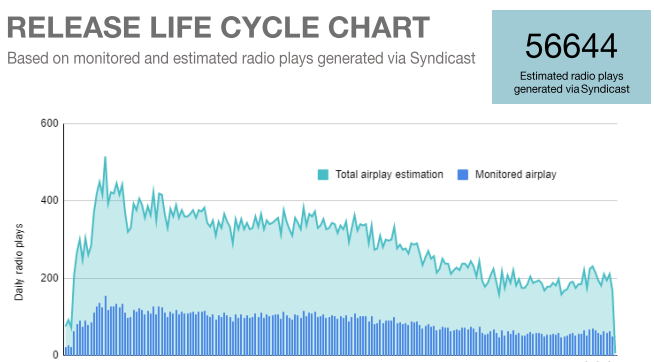
Consider the impact a dedicated service like Syndicast can have:
- Global Reach for Your Music: In one campaign for a well-known artist on a major label, by the end of month four, 361 radio stations across 54 countries had downloaded the track through Syndicast. This level of reach would be incredibly challenging to achieve independently.
- Estimated Radio Plays: The campaign generated an estimated 56,644 radio plays, which means wider audience exposure and potential royalty revenue.
- Boosting Emerging Talent: Syndicast’s share depends on how established the artist is. In that campaign, the 361 Syndicast stations made up 18% of all stations that played the track. The share was 42% for a lesser-known artist on a major label and 90% for an emerging independent artist. This highlights how a plugging service can be a powerful catalyst for discovery. See the full radio promotion case study.
What does this mean for you?
Investing in a reputable radio plugging service can:
- Save you valuable time and effort by outsourcing the outreach process.
- Increase your music’s visibility by leveraging existing industry connections.
- Provide measurable results, with many services (like Syndicast) using third-party airplay monitoring.
- Offer additional promotional tools, such as artist IDs and custom intros, to make your submission stand out.
While there are costs involved, the potential return in terms of audience growth, industry recognition, and royalties can make it a worthwhile investment as part of your overall radio promotion strategy. When researching services, look for transparency, a proven track record, and clear reporting on their results. Here is what to look for in a radio promotion company.
Connect With Radio Stations Using Syndicast
Navigating this five-step process requires time, expertise, and industry connections. For artists who are serious about results, partnering with a professional radio promotion service is the most effective path forward. Syndicast takes the guesswork out of getting your song on the radio.
Across 132+ countries, 3,000+ licensed radio stations use Syndicast. Their music directors can download new releases directly from the platform. Syndicast promotes your release to relevant stations through recommendations, newsletters, banners and pop-ups. Each station decides what to download and play.
We offer tiered pricing options to suit different budgets and campaign goals, from introductory packages for emerging artists to comprehensive campaigns for established major labels. See our radio promotion packages.
Get your release on radio worldwide
Promote your track to 3,000+ licensed radio stations across 132+ countries. Track detected radio plays with WARM and streaming performance with Songstats.
FAQs About Getting Your Song on the Radio
How do I get my song played on the radio?
The most effective method is to follow a strategic, multi-step process. First, ensure your song is professionally mastered and you have a clean radio edit – making it suitable for many radio stations. Second, research and identify specific stations and shows that play your style of music. Third, create a professional Electronic Press Kit (EPK) and send a personalised pitch to the music director or DJ. Finally, be persistent with polite follow-ups and monitor any airplay you receive.
How much does radio plugging cost?
You should never pay a station directly for airplay – this is known as “payola” and is illegal in many countries. A targeted radio plugging campaign can cost a few hundred pounds, while a larger national or international campaign can run into several thousand. The price depends on how long the campaign runs, which markets it covers and what the plugger does on your behalf. The fee pays for promoting your track to stations. Each station decides whether to play it. For example, Syndicast’s radio promotion packages start at £390 per track. See Syndicast’s current packages.
Do I need a separate campaign for every song?
The process is the same whether you have one song or an entire album. Each song you wish to promote is called a “single.” You need to treat each single as its own campaign, creating a specific radio edit, building a pitch around it, and targeting the stations that are the best fit for that particular track based on your musical style.
How long does it take to get radio airplay?
Timing varies by station. A station may download a track before deciding if or when to play it.
Do I need a record label to get on the radio?
No. Many stations play independent releases if the track is broadcast-ready and fits their format. Independent artists can pitch stations directly or use a radio promotion platform.
Which genres work best for radio promotion?
Syndicast focuses on dance, pop, electronic, rock and urban releases, but every format has its audience. The best fit depends on which stations and shows already play music like yours.








 English (UK)
 Español
 Deutsch
 Français
 Italiano
 Magyar
 Polski
 Português