
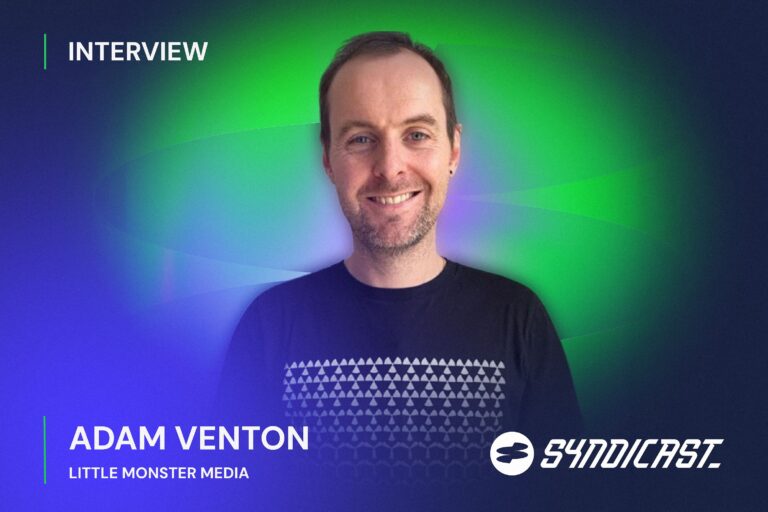
Radio imaging is one of those things listeners hear constantly without necessarily knowing what it is. It sits between the music and the presenter, shaping how a station flows, how it sounds and, ultimately, how recognisable its brand becomes.
For Adam Venton, founder of Little Monster Media, that world has been the focus of his career for more than two decades. After getting his start at GCap’s GWR and learning the craft alongside experienced imaging producers, he went on to work across UKRD, Pure Tonic Media, Wise Buddah’s IMGR service and The Mix Group before taking Little Monster Media full time. His work has since been heard on stations including BBC Radio 1, 1Xtra, Radio 2, Kiss, Hits Radio and RTÉ.
Following Little Monster Media’s partnership with Syndicast, its sound design FX and ready to customise imaging kits are now becoming available to stations across the Syndicast network. The range includes production elements for experienced producers as well as pre built imaging packages designed for station directors and programmers who want professional sounding material that can quickly be adapted for their own brand.
We spoke with Adam about what radio imaging actually is, why louder does not necessarily mean better, where stations often go wrong, how power intros strengthen a station’s identity, and how broadcasters can start improving their imaging without immediately investing in fully custom production.
1. What is radio imaging, and why does it matter?
Put simply, if it’s not the music or a presenter talking, it’s radio imaging! It’s the glue that binds everything together and makes things flow seamlessly. It creates the character and identity of a station. If you had two stations with the exact same playlist, what makes them sound different? The imaging!
2. What actually makes a station sound professional, and where do most stations get it wrong?
A key part is the processing: the EQ and compression on a voiceover, and effects such as delay, reverb, etc. These are often too prominent on non-professional stations. Many stations don’t understand how to properly EQ a voice; it’s a learned skill. The key is using these tools subtly to embellish and lift the voice off the page, and not distract from the message, which is the most important part. Professional imaging is often described as “polished”. The same applies to sound design. Many overcompensate for poor music edits or voice processing by using LOUD sound design. Again, a little goes a long way! Sound design is the glue; it shouldn’t stand out on its own.
3. Tell us about Little Monster Media. How did you get into radio imaging?
I graduated from university in Bristol with a degree in Creative Music Technology, which got me in the door of my local radio station, GCap’s GWR, working on the street team. The team leader introduced me to Ben Marks, now a ReelWorld imaging legend, who was the station producer at the time, as he needed someone to help him out with vox pops and simple editing tasks. Given the degree on my application, they thought I could help. Ben showed me what he does, explained what radio imaging was, and I was hooked there and then. I worked with him for free for two years around my street team shifts to learn my craft and cut a demo.
Eventually, after applying for loads of jobs, I landed one across the road at rival company UKRD! I was there for seven years, working under another imaging legend, Colin McGinness.
I started LMM in 2016 as a side project specifically for sound design, as I was fascinated with how these FX were made. I also freelanced for Pure Tonic Media, then ReelWorld, Benztown, and was also part of the original launch team of Wise Buddah’s IMGR service under George Taylor, another imaging genius.
In 2017, I moved on from UKRD to The Mix Group in the US, before taking the scary leap to take LMM full-time in 2019.
Fast forward to now, and I’ve been fortunate enough to work with some of the biggest radio stations in the world, most notably BBC Radio 1, 1Xtra, Radio 2, Kiss, Hits Radio, and RTÉ in Ireland.
4. If a station has never used custom imaging, where should they start?
Grab an imaging kit, such as the freebie on the Syndicast platform, Modern Pop, and have a play with it. See what works, what doesn’t, and get a feel for what you actually need.
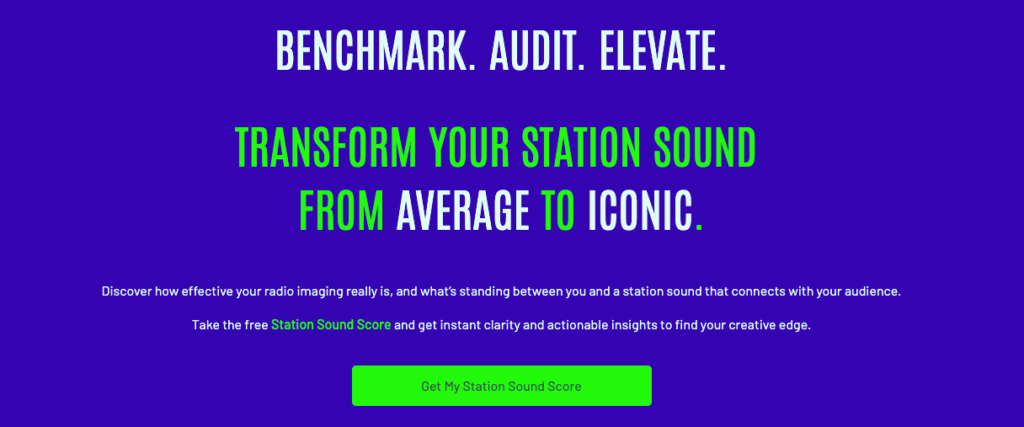
Custom imaging is more expensive, so you want to have a good idea of what you want and need before you look into it. Then hit us up at LMM for a chat! We’ve also got a free little tool that helps you gauge where your imaging is at. You can try the Station Sound Score using the banner below.
5. How do stations use power intros on air?
The original concept behind a power intro was to “own” the music you play. You want your listeners to associate your station with those artists and songs and reinforce your brand.
There are lots of different ways of doing this these days, with custom sung station IDs, clever use of isolated vocals to create messaging, etc. But the purpose remains the same: to enhance the sound of your station and strengthen your brand.
6. What is in the packs you are bringing to Syndicast, and who are they for?
There are two categories to our products: sound design FX and imaging kits.
Sound design FX are albums created for producers. They’re full of impacts, wipes, breakers, whooshes, and all the elements and tools a producer needs to glue their productions together. We purposely don’t overprocess our FX, a tip I learnt from sound design master Jeff Schmidt. They’re not meant to be the stars, but to play a supporting role.
Imaging kits are for station directors or PCs, and are packs of pre-built imaging, ready to customise and go to air. Each cut has multiple mixouts for customisation, or you can simply drop your station strapline and ID into the shell mix and you’re good to go. These packs also include other production tools such as drops, rhythmic workparts, music beds and artist IDs.
7. What are you most looking forward to about reaching stations through the platform?
I’m excited to see how producers and station directors use and implement our products! The creativity in this industry is second to none, and it’s a great feeling when you hear some killer work that has used your tools and resources. Real-world feedback and use also directly shapes our plans for future releases. Who better to tell us what to make next than the people on the frontline using the tools?
More for your station
Discover free music, radio shows, imaging and other broadcast-ready content available to radio stations through Syndicast
Register Your Station →

 English (UK)
  Español
  Deutsch
  Français
  Italiano
  Magyar
  Polski
  Português